
Dreaming
New Worlds.
Kedu Lagos
Exhibition · Marina, Lagos · November 2024
Project Overview
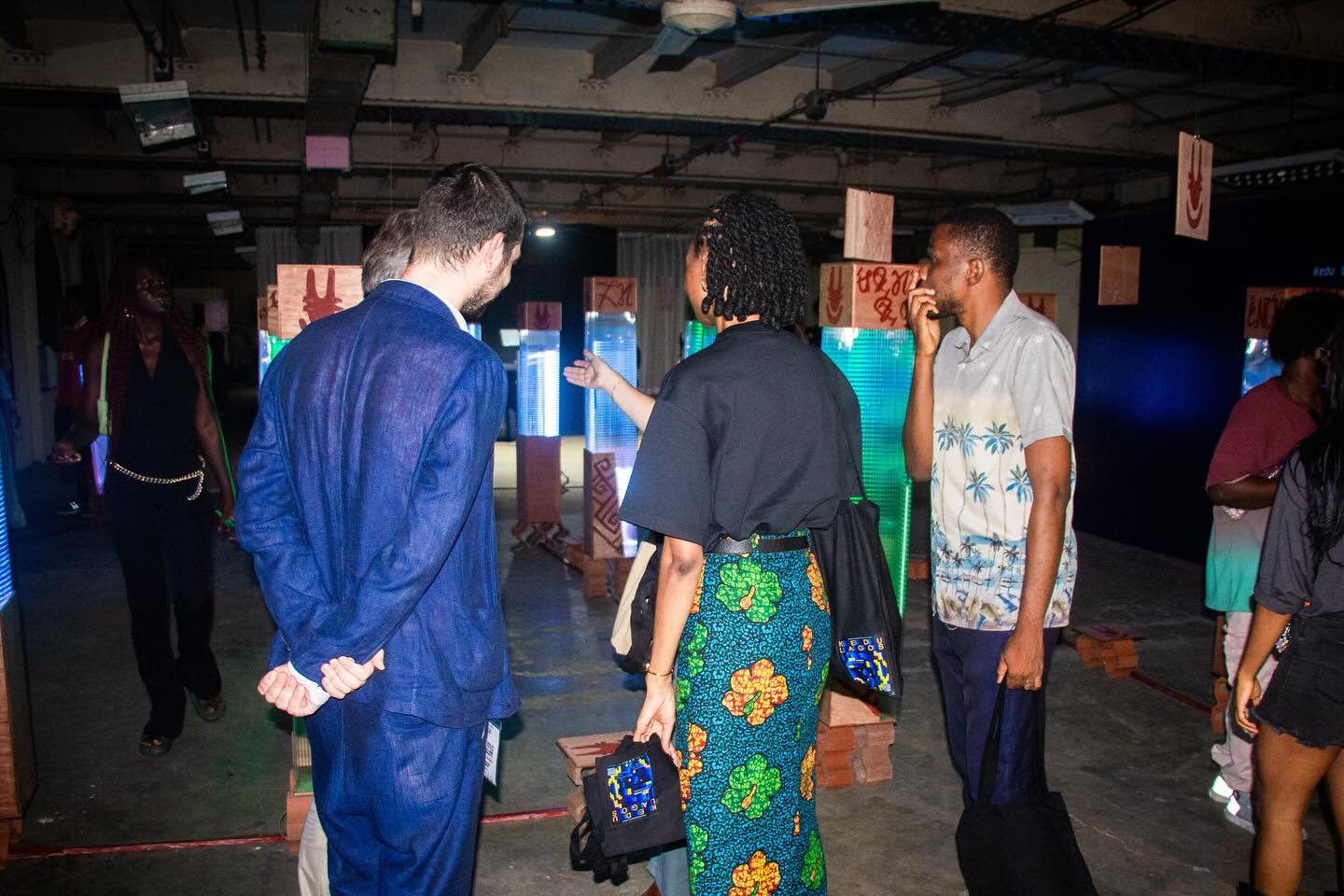
Kedu Lagos transformed the former Government Printing Press in Marina into a space for reimagining the city. Once a site responsible for producing and distributing information across Lagos, the historic building became the setting for a contemporary exhibition exploring how ideas, memories, technologies, and traditions continue to shape urban life. In doing so, the project turned the venue itself into part of the exhibition's narrative, creating a dialogue between past and present systems of communication and knowledge-sharing.
Developed as part of Dreaming New Worlds, a programme supporting artists working at the intersection of art, science, and technology, Kedu Lagos brought together artists, scientists, and creative technologists to interrogate the essence of Lagos and the forces that sustain its resilience. Through immersive installations, the exhibition explored themes of collective memory, entrepreneurship, communication, community, and technological transformation, inviting audiences to reflect on the city's evolving identity and future possibilities.
The significance of the former printing press extended beyond its architecture. By situating digital artworks and speculative installations within a building historically associated with the circulation of information, the exhibition examined how ideas travel across generations, how knowledge is preserved and transformed, and how technological shifts continue to influence social and cultural life in Lagos.
As producers, A Whitespace Creative Arts (AWCA) Foundation coordinated the delivery of the exhibition, working across disciplines to bring together artists, researchers, technologists, cultural practitioners, and institutional partners. The team helped shape an experience where the artworks, public programme, and historic setting reinforced one another, creating multiple entry points for audiences to engage with the ideas at the heart of the project. By activating a historic landmark and filling it with contemporary questions about memory, technology, and collective futures, the project demonstrated how cultural production can connect the histories of a place with the possibilities of what it might become.
Gallery